High-impact economic data releases—red folder events like CPI, PPI, and NFP—drive session direction in E-mini Nasdaq-100 (NQ) and Gold (GC).
The engine parses live macroeconomic headlines, news sentiment intensity, cross-market asset drivers, and economic calendars to deliver a clean, non-lagging directional bias score before and during active trading sessions.
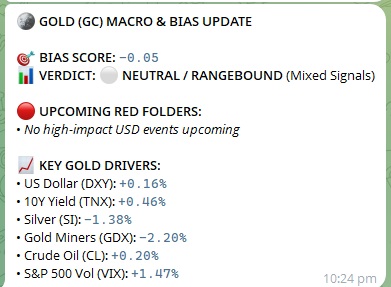
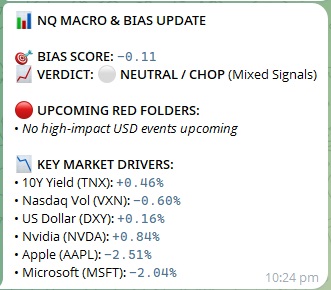
⚡ Real-Time Sentiment Scoring
Uses natural language compound scoring across breaking headlines to detect shifts between risk-on momentum and hawkish macro pressure.
📊 Intermarket Velocity Tracking
Live percentage-change telemetry across core correlation drivers—10Y Yields (TNX), US Dollar (DXY), VXN/VIX, and mega-cap tech heavyweights (NVDA, AAPL, MSFT).
🔴 High-Impact Calendar Radar
Automated calendar engine that isolates future USD red folder events with precise timestamps, ensuring you never trade blind into high-volatility prints.
Latest Market Structure & Strategy Guides
- Volume Imbalance vs. Fair Value Gap: Precision Trading on Tick Charts
 Understanding the structural difference between a volume imbalance vs fair value gap is critical for traders executing on intraday tick charts. In retail technical analysis, price action traders often conflate liquidity voids, price gaps, and order flow imbalances. Two structures that are frequently confused—yet carry completely different execution implications—are Volume Imbalances (VI) and Fair Value… Read more: Volume Imbalance vs. Fair Value Gap: Precision Trading on Tick Charts
- Candle Range Theory (CRT) in Futures: Trading Institutional Daily Structure
 Most retail traders analyze candlestick charts through isolated pattern recognition—searching for hammers, dojis, or engulfing candles without regard for time-based auction structure. Institutional execution systems, however, process price action through specific time windows and range mechanics. Understanding candle range theory crt trading allows futures traders to deconstruct daily and intraday candle formation into three predictable… Read more: Candle Range Theory (CRT) in Futures: Trading Institutional Daily Structure
- The Macro Economic Calendar: How CPI, PPI, and Core PCE Drive Futures VolatilityEvery professional futures desk structures its daily and weekly execution around high-tier inflation benchmarks. While technical traders monitor moving averages and trend channels, the true catalysts behind aggressive trend expansion and intermarket re-pricing are sovereign macroeconomic reports. Understanding how cpi ppi core pce trading dynamics function allows index and commodity futures traders to anticipate explosive… Read more: The Macro Economic Calendar: How CPI, PPI, and Core PCE Drive Futures Volatility
- SMT Divergence Explained: Identifying Intermarket Order Flow Cracks Between ES and NQ
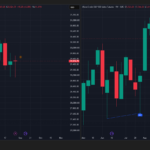 Mastering smt divergence trading across index futures gives intraday traders an objective early warning system for market reversals. In modern electronic futures markets, major equity indices—the E-mini S&P 500 (ES), E-mini Nasdaq-100 (NQ), and E-mini Dow (YM)—share an overwhelmingly strong positive correlation. Under standard market conditions, these instruments trend in unison, driven by overarching macroeconomic… Read more: SMT Divergence Explained: Identifying Intermarket Order Flow Cracks Between ES and NQ
- Developing VWAP and Volume Profile: Trading Institutional Value Area Rotations
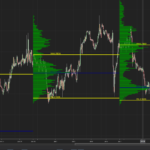 Combining institutional volume profile vwap trading frameworks gives traders a clear, non-lagging map of where liquidity has transacted. Retail technical analysis typically relies on indicators calculated strictly from price over time—such as moving averages, relative strength oscillators, and trendlines. Institutional execution desks, however, do not view the market linearly across time. High-volume auction participants operate… Read more: Developing VWAP and Volume Profile: Trading Institutional Value Area Rotations